
Blog posts tagged "MicroK8s"

Open Infrastructure Summit is coming to Denver from April 29th to May 1st, 2019. Will you be there? We sure will! Come and visit us in Booth B1! Canonical experts will be at the event ready to answer your questions and walk you through our booth demos. Just to name a few: Open Infrastructure developers

Canonical released MicroK8s in December 2018, and as its popularity has grown, some interesting projects using this micro Kubernetes distribution have surfaced. To begin with a little background, Kubernetes is an open source container orchestrator that assists with deploying, upgrading and provisioning applications. Kubernetes is unique i
March 25, 2019 Canonical announces full enterprise support for Kubernetes 1.14 using kubeadm deployments, its Charmed Kubernetes, and MicroK8s, its popular single-node deployment of Kubernetes. MicroK8s provides Kubernetes 1.14 on any Linux desktop, server or VM – over 40 Linux distros. Mac and Windows are supported too, with multipass. E

February 28, 2019 – Canonical today announced support for containerd in its 1.14 releases of Charmed Kubernetes and Microk8s, improving security and robustness. “Containerd has become the industry-standard container runtime focused on simplicity, robustness and portability.” said Carmine Rimi, product manager for Kubernetes at Canonical.
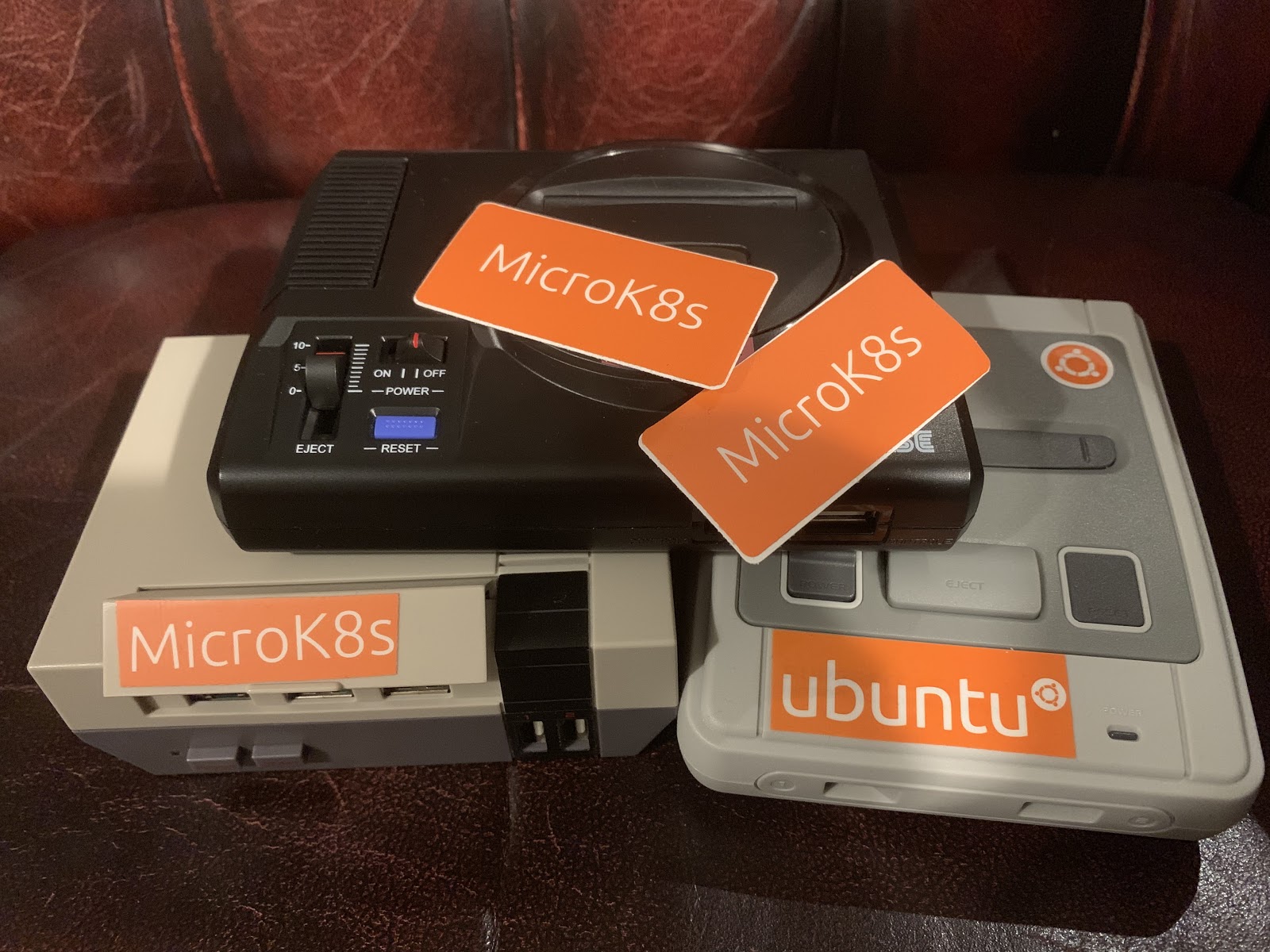
Introduction The goal of this blog post is to explain how to setup and run Ubuntu Server on a Raspberry Pi with MicroK8s on-top to provide a single-node Kubernetes host for development and testing. In the last few months Ubuntu Server 18.04 has been ported to run the Raspberry Pi 2/3 which means we can
The appeal of Kubernetes is universal. Application development, operations and infrastructure teams recognise diverse reasons for its immediate utility and growing potential — a testament of Kubernetes’ empathetic design. Web apps, galvanised by the 12 factor pattern as well as microservice-structured applications find a native habitat in

Automate your Kubernetes deployments on AWS, Azure, and Google Recently, there’s been talk about how Kubernetes has become hard to deploy and run on virtual substrates such as those offered by the public clouds. Indeed, the cloud-specific quirks around infrastructure provisioning, including storage, networking assets such as load balancer

Stu Miniman and John Boyer of theCUBE interviewed Stephan Fabel, Director of Ubuntu Product and Development at the OpenStack Summit in Vancouver. Read on for the full interview, and to hear more on Kubernetes, Kubeflow and MicroK8s. OpenStack has entered a new phase, maturing to a point where those in attendance are serious about open
- Previous page
- 4
- 5
- 6
- Next page