
Blog posts tagged "Server"

Canonical is happy to announce that MAAS 2.9 is now available. We’ll get to the details of installing it in just a moment, but first, let’s walk through a brief overview of the new features and fixes. Later on in this post, we’ll cover some of these features in much more detail. New features &

Continuing in our series on CLI-only MAAS operation, it’s time to deploy machines. In the previous post, we reached the point of creating and commissioning machines, using only the MAAS CLI. Moving forward, there are two key steps: acquiring machines, and then deploying them. Let’s take a look Acquiring a machine using the CLI When

The whole point of MAAS configuration is to get machines deployed. If you read the previous post in this series, you know how to install MAAS and do basic configuration using only the MAAS Command-Line Interface (CLI). So far, so good, but now we need to enable networking and create some machines. Enabling DHCP The
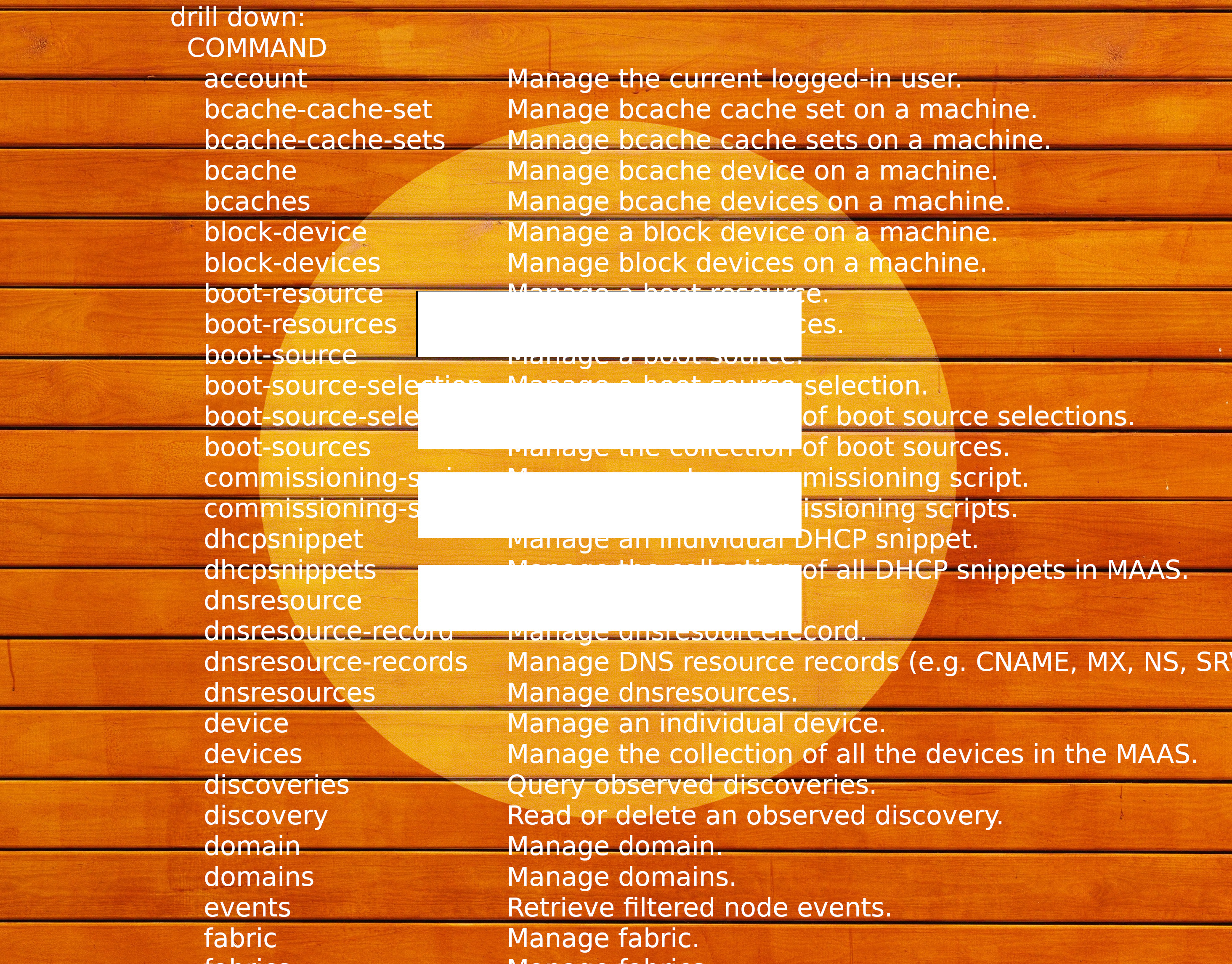
MAAS provides a state-of-the-art User Interface (UI), which is relatively simple to use, if the required inputs are known and understood. You may be less familiar with the MAAS Command Line Interface (CLI), which is actually more robust, providing additional functionality that’s not accessible via the web UI. In this series of blog posts,

Ubuntu optimized AMIs for Amazon EKS and Kubernetes versions 1.17 and 1.18 are now available.

This article originally appeared on Joshua Powers’ blog Ubuntu is the industry-leading operating system for use in the cloud. Every day millions of Ubuntu instances are launched in private and public clouds around the world. Canonical takes pride in offering support for the latest cloud features and functionality. As of today, all Ubuntu

The second generation of AMD EPYC central processing unit (CPU), codenamed Rome, provides outstanding performance and “hardened at the code” security. It was launched in 2019 and has already been widely adopted. Support for AMD EPYC Rome has been merged to the Linux kernel starting with 5.4 series. Therefore, all Ubuntu releases with 5.4

Is Ubuntu an enterprise Linux distribution? If you are asking, you are probably wondering if you can use Ubuntu anywhere else other than your workstation or development environment. Perhaps you are wondering whether you can implement Ubuntu in your enterprise, including production environments? If that is the case, I have good news for yo
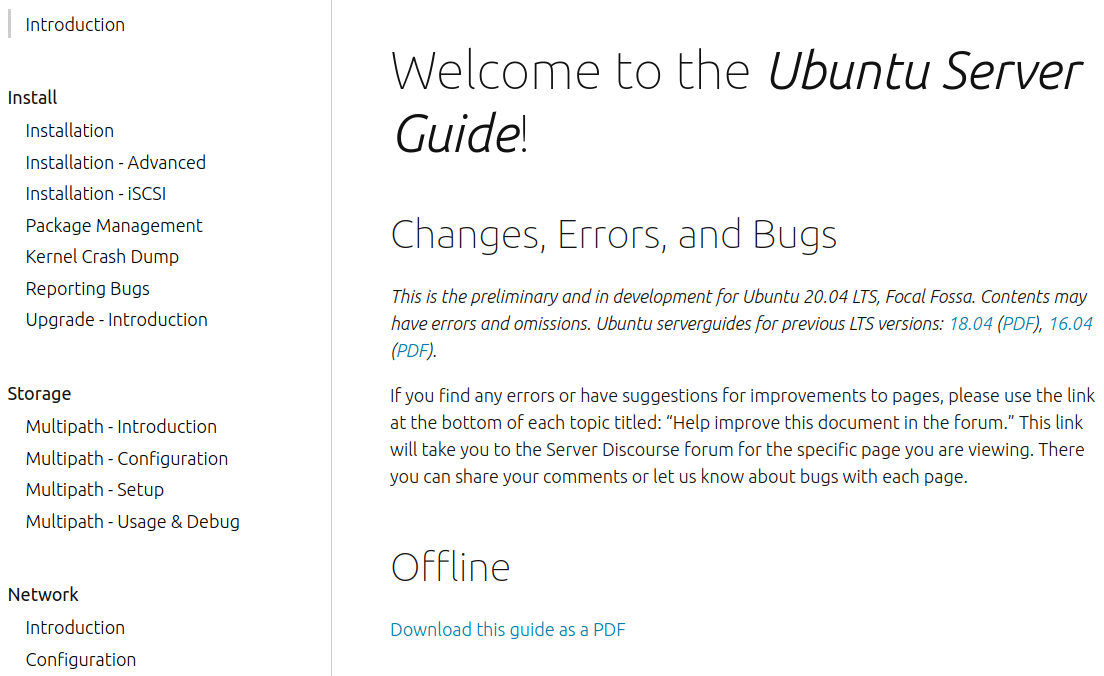
This article originally appeared on Joshua Powers’ blog With the release of Ubuntu 20.04 LTS (Focal Fossa) the Ubuntu Server Guide has received a major set of updates and has moved to a new location on the Ubuntu website. The new location makes it much easier to read and contribute improvements. There is a link

This article originally appeared on Joshua Powers’ blog Ubuntu is the industry-leading operating system for cloud hosts and guests. Every day millions of Ubuntu instances are launched in private and public clouds around the world. Many launched right on top of Ubuntu itself. Canonical takes pride in offering the latest virtualization stac
This article originally appeared on Joshua Powers’ blog The Ubuntu Server Live Installer, introduced with the release of Ubuntu 18.04 LTS (Bionic Beaver), provides a live Ubuntu Server environment along with a streamlined server installation experience. Building on guided installs for LVM, RAID, encrypted disks and advanced networking con

This article originally appeared on Joshua Powers’ blog One of the most exciting security enhancements in Ubuntu 20.04 LTS (Focal Fossa) is the ability to use the Fast Identity Online (FIDO) or Universal 2nd Factor (U2F) devices with SSH. By using a second authentication factor via a device, users can add another layer of security

For mission-critical applications, security, reliability, and efficiency are essential. Linux excels in these areas, which is why it has become a highly popular platform for supporting key enterprise software. And for businesses looking to push the security and performance of their Linux-based applications even further, the next step is e
Hello Ubuntu Server The purpose of this communication is to provide a status update and highlights for any interesting subjects from the Ubuntu Server Team. If you would like to reach the server team, you can find us at the #ubuntu-server channel on Freenode. Alternatively, you can sign up and use the Ubuntu Server Team

Hello Ubuntu Server The purpose of this communication is to provide a status update and highlights for any interesting subjects from the Ubuntu Server Team. If you would like to reach the server team, you can find us at the #ubuntu-server channel on Freenode. Alternatively, you can sign up and use the Ubuntu Server Team

(Also published on my blog at robinwinslow.uk) Update: The default used in the official nginx docker image was changed from SIGTERM to SIGQUIT in November 2020, so this should no longer be an issue for Docker or Kubernetes users. nginx is a very popular web server. It may have just become the most popular web